
Turismo de Canarias, CSIC and the Canary Islands’ public universities move forward towards a blue and sustainable tourism model
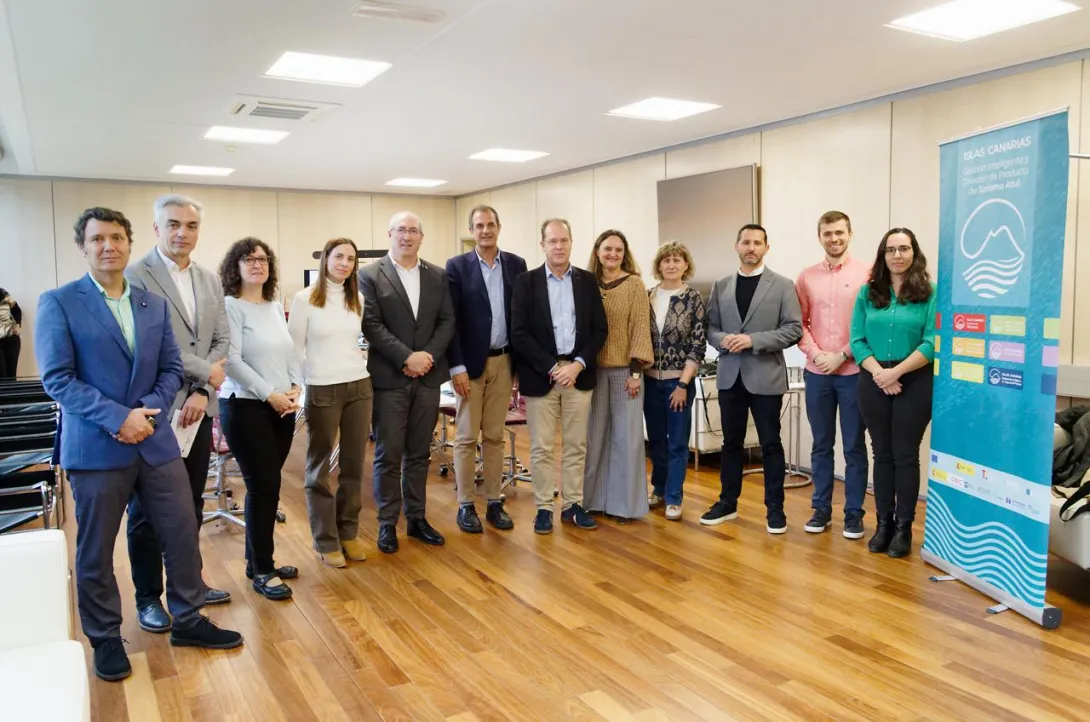
Turismo de Canarias, the Spanish National Research Council (CSIC), and the two public universities of the archipelago continue to advance toward their shared goal of consolidating a regenerative, blue, and sustainable tourism model. For more than a year, 63 researchers -19 of them newly hired- have been working on six projects that will result in initiatives with a positive environmental impact.
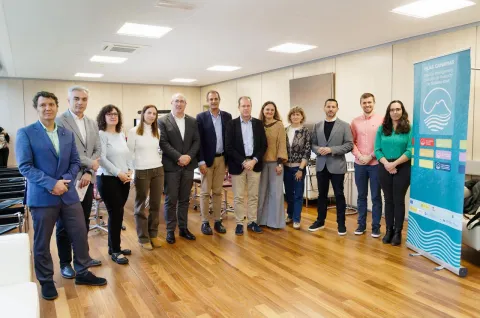
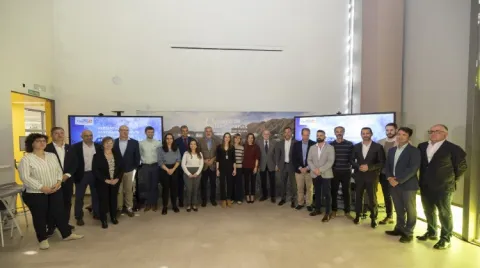
Although this program concludes in June, the projects are already highly advanced, and their progress was presented by the principal researchers during a working session held last Friday, March 27, at the Canary Islands Oceanographic Centre (IEO-CSIC).
For more than a year, 63 researchers have been working on six projects that will result in initiatives with a positive environmental impact.
Both the tourism sector and society as a whole will benefit from this program, which was created to develop a blue tourism product aimed at strengthening environmental sustainability, improving scientific knowledge applied to tourism, and contributing to the archipelago’s climate neutrality and economic diversification model.
The Agreement for Smart Management and the Creation of a Blue Tourism Product amounts to €4.1 million: €3.2 million is funded through the European Union’s Recovery and Resilience Facility (RRF), while CSIC, ULL, and ULPGC contribute nearly €1 million in staff working hours.
This ambitious agreement is based on the conviction that tourism should act as a regenerative driver for the destination’s natural environments and that this strategy must encourage the active participation of all sectors of society.
This ambitious agreement is based on the conviction that tourism should act as a regenerative driver for the destination’s natural environments.
In achieving this goal, the scientific community plays a key role in strengthening sustainable tourism management, expanding knowledge to reduce environmental impacts, and promoting smarter tourism management alongside higher-value blue tourism products.
The six projects
The program, funded through MRR Blue Tourism Cohesion funds, consists of six projects:
“Canary Islands: A Volcanic Destination”, coordinated by the Geological and Mining Institute of Spain (IGME-CSIC) and ULL, focuses on identifying and enhancing the archipelago’s most outstanding volcanic landscapes to transform them into safe, accessible, science-based tourism experiences. Fifty high-value volcanic geosites, well preserved and visually striking, have been selected to develop interpretive products, routes, and educational resources supported by immersive technologies such as 360º tours, virtual reality, and StoryMaps. This project will create a strong, differentiated, and competitive volcano tourism product aligned with the geological identity of the Canary Islands.
“Promoting Ocean Health in the Canary Islands”, coordinated by ULL, ULPGC, and the Spanish Institute of Oceanography (IEO-CSIC), has analyzed marine litter reaching the Canary coasts -particularly plastics and microplastics- to understand its origin, movement, and how long it remains in the ocean before arriving in the archipelago. This project will provide the tourism sector with key scientific insights to better understand coastal pollution, anticipate events, improve coastal management, and design data-driven contingency plans.
“Canary Islands: Unique Marine Nature, Health and Wellbeing”, led by the Institute of Natural Products and Agrobiology (IPNA-CSIC), ULL, and IEO-CSIC, studies unique marine microorganisms living in the Islands’ volcanic ecosystems. Adapted to extreme environmental conditions, these microorganisms may produce compounds with potential benefits for health and wellbeing. This project opens the door to new tourism products and experiences inspired by the archipelago’s volcanic and marine environment.
“Canary Islands: Protectors Against Climate Change”, coordinated by IEO-CSIC, has so far sampled beaches across the archipelago -47 in Tenerife, 12 in Lanzarote and Gran Canaria, 11 in Fuerteventura and La Palma, and 6 in El Hierro- analyzing their mineral composition, olivine content, and their potential for carbon capture and mitigating ocean acidification. The results can be integrated into innovative tourism experiences such as interpretive routes, visitor centers, environmental education programs, and professional training, explaining beach mineral composition in the context of the Islands’ volcanic origin.
“Canary Islands: A Sea of Sounds”, coordinated by ULL and IEO-CSIC, has involved the installation of nine hydrophone systems and underwater cameras to acoustically monitor marine biodiversity, with the aim of creating a public database of sounds and images of marine species in reserves and protected natural areas. This information will support scientific research and promote responsible, non-invasive blue tourism. It will also allow residents and visitors to identify sounds heard while swimming, diving, or whale watching, and to gain a deeper understanding of the archipelago’s biodiversity.
“Canary Islands: A Global Benchmark for Water Quality Monitoring”, coordinated by IEO-CSIC, uses advanced satellite technologies to better understand changes in the ocean and atmosphere surrounding the Islands. A real-time smart data layer is being developed to monitor sea temperature, water quality, marine productivity, and other key variables. Satellite data will be validated with in-situ measurements taken in the archipelago, strengthening the Islands’ candidacy to host one of the world’s leading satellite calibration infrastructures (OC-SVC). This project will provide a key tool for the smart management of marine resources in a climate change context, improving the management of beaches, ports, natural areas, and marine leisure activities.